
In this episode, we sit down with Alex, co-founder and CEO of Fuel, to explore why traditional learning methods are failing—and what’s replacing them. With information overload at an all-time high, simply consuming knowledge is no longer enough. The real advantage comes from applying what you learn in real time.
We dive into the science behind the “forgetting curve,” why most learning management systems don’t work, and how microlearning, AI, and performance-based platforms are reshaping the way we grow, lead, and succeed. Alex shares how Fuel is helping individuals and organizations move from passive learning to active application through bite-sized lessons, expert guidance, and personalized AI coaching.
If you’re looking to learn faster, retain more, and actually use what you know—this conversation will change how you think about learning forever.
🔑 In this episode, you’ll learn:
Why 70% of what you learn disappears within 24 hours
- The difference between knowledge-based learning vs. performance-based learning
- How microlearning improves retention and real-world application
- The role of AI in personalized, scalable learning
- How to break through skill plateaus with expert feedback
- Why applying knowledge—not memorizing it—is the key to success
Whether you’re a leader, entrepreneur, or lifelong learner, this episode will help you rethink how you learn—and how you perform.
—
Listen to the podcast here
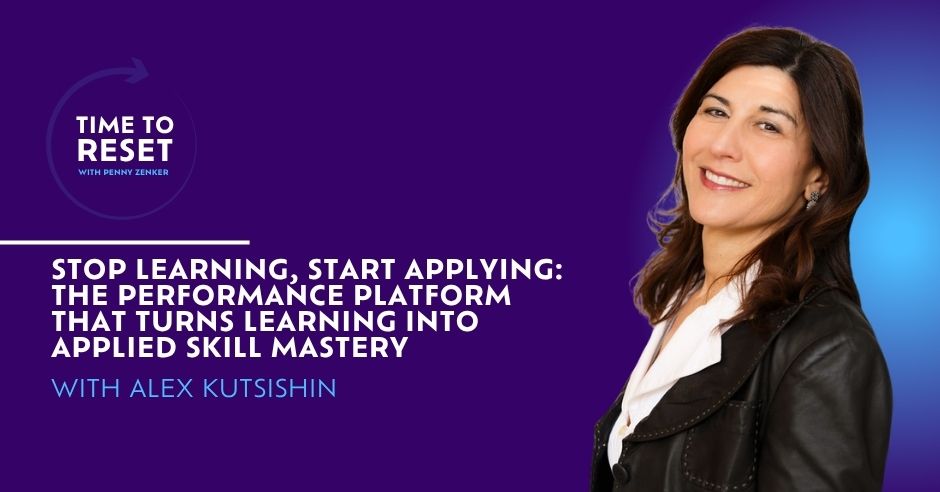
Stop Learning, Start Applying: The Performance Platform That Turns Learning Into Applied Skill Mastery With Alex Kutsishin
Welcome. I’m so glad that you’re here. We have a very special guest. Alex Kutsishin is here with us. He is the co-founder and CEO of Fuel !nc. It’s a performance-based micro content platform built for instant application, learning mental fitness, and personal development. He’s a builder with receipts named 30 under 30 and 40 under 40, and a two-time EY Entrepreneur of the Year winner and an INC 101 winner. Alex blends high-performance strategy with real-world leadership, turning big ideas into bite-sized habits that stick. If there’s a faster way to learn, lead, and level up, he’s probably already shipping it. Alex, welcome to the show. I’m so excited to have you here.
Thank you so much. I’m excited to be here. This is going to be fun. I know what you get into and I can’t wait.
We’ll talk a little bit about how we came together and all of that a little bit later. MyFuel.io is where people can find it. A lot of people are thinking the world doesn’t need another learning management system and you’ve brought a system that people may perceive as that type of a system. What do you say to that?
The Flawed Learning Management System Model
I agree with you. The world does not need another learning management system. By the way, all those learning management systems, I hope you don’t take this to personal when I say that a learning management system is a glorified video filing cabinet. Who needs another video filing cabinet? The intention of LMS were right because it’s about giving people access and ability to learn on the fly just in time and on demand things. The concept is there and the challenges, as is with all learning 99% of it because that’s most of the still done. The challenge is platforms are still focused on getting people to remember information that is a broken model.
Did it ever work? Let’s step back for a second because there’s a thing called the Law of Forgetting. That means it’s not our fault. It’s not the system’s fault of wanting to teach people. Basically, twenty minutes after we have learned something, 40% of that new information fades away. It takes us one hour to go on after one hour, 50% fades. After 24 hours, up to 70% of what we learned is gone. Especially now with so much information coming out of us. As a matter of fact, you are going to love this statistic. I heard that we process more information coming at us in various different forms in one day that people did in a lifetime 50 years ago. No wonder we can’t remember anything.
That’s exactly right. There’s that. There’s all of those things, but there was also just the fact because you’re asking has it ever worked? Yes. Learning from memory has worked. It’s been effective. Let’s talk about why we do anything as human beings. We are here for survival just like everything else on this planet. Survival requires evolution. I encourage people to do this. A cool story is about the history of apples. Why apples are everywhere?
We are here for survival, just like everything else on this planet. Survival requires evolution. Share on XThe trees evolved. Change the flavor of their own fruit that they were bearing. It used to taste horrible. Now, it’s everywhere. There’s a great history behind that. It evolved for what reason? The same reason we evolve, survival. There was a time where just your knowledge and your information alone made you very valuable. There were courts that Kings would have of smart people that can answer questions. They were never to be home.
They would never lose their heads. Being smart meant survival. I could live a very long life. I could have a gray beard and maybe live in a safe, warm place. There was a time where just learning for knowledge was important. If we move forward a little bit, we’ll find that things like academic-type of roles require constant knowledge. All of your medical practices and you can fill in the blank that require academia a lot of it consistently.
It’s like, “That person, let’s make them a professor. Let’s make them run our department and all these good things because they know all of these things.” We have quickly moved away from knowledge on its own as being the most valuable part of a person or that person’s traits. Now, it’s about what can you do with that knowledge? We now have access to the same knowledge and access the way of the knowledge to. Now the knowledge doesn’t stay stagnant and in a static mode. It’s ever-changing, evolving and also communicates back to you.
The knowledge talks to you. When you look and Google and you do a search, which used to be a search engine is now a response engine. You ask and it gives you a response. Not where you can find answer but the answer first. Once again, saying that information is important but not as important as the outcome of that information.
As you said, times have changed. We’ve evolved. The way that we gather that knowledge, the way that we want to use that knowledge, is ever-changing. To talk about real quickly, back to your point about the video library in LMS. Now we have YouTube. We have the biggest video library that’s out there. One of the general problems with acquiring knowledge and people having all of this at their fingertips is also cognitive overload. It’s just there so much. What do we listen to? What is valuable? I believe also part of this is having a true curated platform that helps to be sure that it’s the knowledge that I need when I need it and how do you deliver that.
From an expert that’s trusted and their content is working now. Not something that is just theory or ideas or you’re just getting answers to questions. A platform that has heart-forward experts like yourself who know your stuff. You’re applying it all the time. You’re not just talking about it. You’re doing it. Your customers are benefiting from it. You’re in a platform where someone needs to learn how to do the thing that you teach and that you do so well.
I can get it from a vetted expert and if I need more, that’s the beauty of why an LMS that basically allows you to look at a screen and learn is an outdated, broken system that doesn’t work. Maybe it did but it doesn’t work at the moment because it’s this only one way of connecting. Now you’re in a platform where when somebody watches your content and says, “Penny, this is brilliant. I wish I could have you do this for my leaders that our retreat.” That’s what Penny is there for.
We want you to reach out to Penny. We want you to say, “Penny, we’ve all watched your content. We’ve all engaged with your AI. It’s helpful. We have a big initiative. We want you to personally get involved with this. Can we get you to do a keynote for us next?” That’s the purpose. Not one-dimensional. I watch and try to remember, but multi-dimensional. I watch and I remember. I work with the AI. I have questions for the real human. All of that is how you grow.
Let’s step back because for a lot of people, this might be their first introduction to MyFuel. What is different? Tell us in a couple minutes what the structure is. How do people learn on the platform? How is it different from other types of platforms?
Fuel Is A Performance Platform
Fuel is a performance platform. Not a knowledge platform. We need to make a distinction of what that means. Learning and knowledge platforms teach for knowledge and for understanding. It’s like, “Alex, isn’t that the purpose?” Kind of. Knowledge is saying you understand. Performance is proving you understand. We want to make sure that we can prove we understood that by being able to do the thing we learned. Rather than remember the thing we learned. Memory alone, as we just talked about, is not where you want to be focusing.
You want to be focusing on applied knowledge. Where can I apply the thing that I know? Fuel has experts like yourself, Penny. We have over 200 altogether at the moment but only about 51 or 52 in the platform live with content and interactive learning. Every single one of these experts has a proven method and has a proven process. What we’ve done is we’ve taken all of these experts. We’ve taken their content and we’ve remastered if for performance learning and training knowledge gathering.

Every piece of content is constantly sharpened towards, “Now that you’ve learned this, go ahead and apply it and make sure that it’s fixed.” Throughout all of the course where you’ll find when you go in there and they’re all micro content courses and lessons. Everything is usually below five minutes or so. You’ll be able to take a piece of information that Penny teaches you.
In that one lesson, you will need to watch any other lesson. You’ll be able to take that one lesson and apply it now. That’s what micro learning is all about. You don’t need six chapters cut up into five minutes to go like, “Now that I’ve done 30 minutes, I can take do this.” No. Penny and all of our other instructors, when they teach you something, that one thing you can do right away. That’s the number one biggest difference. We’re not teaching you for memory. We’re teaching you to apply the thing you just learned.
It’s that interactive application that’s absolutely key. I want to point out the whole micro lesson and why that’s important. It’s because people don’t have the attention span that they had. They need to find that thing that they’re looking for now. Maybe they’re working on negotiations for a contract and they need to look at that in a specific way. They want to go right to that information that they need. They can get that quickly in a lesson and then interact with that AI.
Exactly. Also, apply it right there and then.
That’s also the difference. It’s not learn, hold on to it until when you need it because when you need it, you’ve forgotten it or you haven’t applied it in between. A lot of great training programs. stop when you leave the program. There’s no ongoing application that helps you to integrate. You can integrate it so that you can apply it where and when you need it.
That’s also one of the beauties of this platform. It’s having that AI instructor to always go back to and ask questions like, “This didn’t work for me in this way. What are my other options?” Comes then some other options because everybody is different. Their situation is a little bit different. Their personalities are a little bit different and they may need some alternative approaches and there it is.
Continuous Application With Expert Guidance
What you’re mentioning is the real secret behind Fuel. A mathematician named Ericson in 1993 helped prove the power law of practice, which is a mathematical law that says that something you repeat over and over again you get better at. That makes sense on the surface. Over time, mathematicians found that it doesn’t continue. You don’t just get better at something you do over and over again. That hits a wall. There’s a limit.
You can hit a limit of getting better at something when you’re repeated over and over again and this is where Fuel comes in. Unless an expert helps you break through those limits. That’s what Fuel is all about. When you learn and practice, you can’t just practice with anyone. You can only practice with the experts you learn from because that expert can show you how to reach the next level then the next level.
When people are practicing with their peers or their managers or on their own, and no one is telling them how much they can improve or where they need to improve. They will get better to a point. That’s a fact. That’s a mathematical law. You’ll read about it, but then you’ll stop. There’s a cap. It’s like, “How come I’m not getting better?” No expert is pushing you past that limit. You’re not repeating the same habits, which may end up being bad habits over time because things change.
You go down or hit your plateau. Exactly what you said, the beauty of Fuel is that Penny teaches you something and you go, “I want to apply that and make sure it makes sense to me.” You’re practicing it with Penny. With her knowledge. Not things being pulled from the web, but her actual knowledge. Her proven knowledge. Every time you practice, she’s telling you, “Have you ever met a coach that gets you to practice something and says, ‘1,000%, you don’t need anything else?’” It never happens.
No coach will ever say that. If they’re a real coach, they’re going to say, “That’s good. Do you know where else you can improve now?” You’re going to improve in that area. You’re like, “I’m done.” You never did. You’ve improved there but do know where else you can prove? It’s never over, which is why the elite exist. The elite exist in anything in life, such as sports, military, chefs, and medicine. You name it. The reason anyone is elite in anything. They’re constantly applying it with someone telling them how they can do better.
I like that even in martial arts. You hit black belt but there’s multiple levels of black belt. Even when you’re at an elite status, there’s always a nuance that can make you just a little bit better.
This wasn’t possible at scale before. What’s interesting is that until we came around talking this way to the world, everyone was looking to build a better learning system. We’re like, “What? No. Stop.” It’s not about learning. We’re good at learning stuff. Humans are the best at learning stuff or the most adaptable. Change the environment. It’s cold. I know exactly how to get warm. It’s warm. I know exactly how to get cold. I will figure it out. Humans can figure things out. That’s what makes us so special. It’s how quickly we adapt.
Alpha Schools Focus On Application
It’s not about learning. It’s about how we put that learning to use. That’s the challenge now. Everyone reading, I encourage you to do this. If you look at something, do your research on Alpha schools. It started in Texas. Now, it’s spreading out in 5 or 6 different States. They are about to have this. Why? Why so quickly? Only a couple years and the results are tremendous. Are you ready? The average SAT score from an alpha school in 2025 was 1,530 points.
They are the school that has the lowest amount of learning time out of any school in the country, two hours a day. That’s it. It’s not talking to everyone. Two hours of hyper-personalized, ultra-nuanced, and learning per person in the class. Every person had their own AI instructor about every single topic that they were learning. Guess what they were doing? Is that what we’re doing in Fuel? Identical. They learn. They stop. They go, “Show us that you understood it. Show us what you learned from me you can do.”
Forty students in class having 40 unique conversations about the way that they understood what was said. All 40 got different ways how they can do better. All 40 had different nuances and ways that they could improve. Over the course of the year, in those subjects and in those areas, the highest scores consistently in a cohort that anyone’s ever tracked in school.
They are meeting people where they are personally. That is also a huge difference. I did a research study on personalization in the new era of personalization. That’s where we have this ability with this technology to do it at scale and to make sure that each person has that individualized attention and connection that meets them where they’re at. That is key. That opens up.
You had mentioned it. You didn’t say it just now, but when you said we’re focused on the wrong thing. It’s because things change. We continue to focus on the learning but your platform. You talk about it as performance platform. When people find it that they’re not learning. That’s not the end result. The end result is that we have better performance. We forget that sometimes. We get lost in that lower level of a task. The learning is maybe the task, but if we remember the higher-level objective, that is the performance. We’re going to find new ways to make that happen based on the environment that we’re living in.
The Expert In The Loop
It makes people like you far more valuable than you’ve ever been before. Someone like you, an expert, there’s a whole trend. You can look it up like an expert in the loop or a human in the loop, where attorneys that used to have to do everything are now being asked. This attorney is an example. It’s every category but an attorney used to be asked, “Can you help us write this contract?” It’s going to be $200 an hour to write this contract. Now, it’s, “I have written a contract. Can you make sure I’m not going to get in trouble from it?”
It’s too expert in the loop but the export is more valuable than ever. All of the misinformation out there is going to get a lot of people in trouble. You need an expert, hence Penny, to be there to make sure that what people are getting ready to do that they’re having AI help them with is the best thing that they can do. For instance, as you go out there and ask people who are working with experts like you. For the first time ever, you’re going to say to an organization, “I know you scheduled this for your twenty leaders, but you have 300 people in your organization.”
All the misinformation out there is going to get a lot of people into trouble. You need an expert to ensure that anything you use AI for is actually the best decision you can make. Share on XBefore you think about the numbers, would it be helpful for me to be in the room with all 300 of your people helping them get focused and reset. Every employer is going to say, “Of course, Penny, but it’s too much.” You’re like, “I told you don’t think about the numbers.” Would it be beneficial? Is the advantage yours if I’m in a room with every employee? Obviously. You go, “I now can be at scale for each person.” This is important for everyone that’s reading that’s an expert in gurus. That’s where, all of a sudden, you all deserve to be paid for what you know. Not what you do. You’ve already proven you can do it.
You need to be able to do it at scale. For you to be able to do it at scale, you need to be compensated for what you know. That is where your AI in your courseware start to allow you to help tens of thousands rather than the hundreds that are able to afford you. You can be in their meeting room with them. We talk about what’s the real impact of Fuel and what we’re all doing together here. You can physically help more people than you’ve ever been able to help. You should because your stuff is fantastic.
Thank you. We’ve given it away. I’m excited that I am an instructor on the Fuel platform. I want to say that I chose this platform for everything that you’re saying. I want to make a greater impact. I want more people to have access to the experience and skills that I’ve built over these years and can share with more people. It’s because this is the future of learning. It’s this application. I’ve always been about that. I went to Drexel, which had a co-op program.
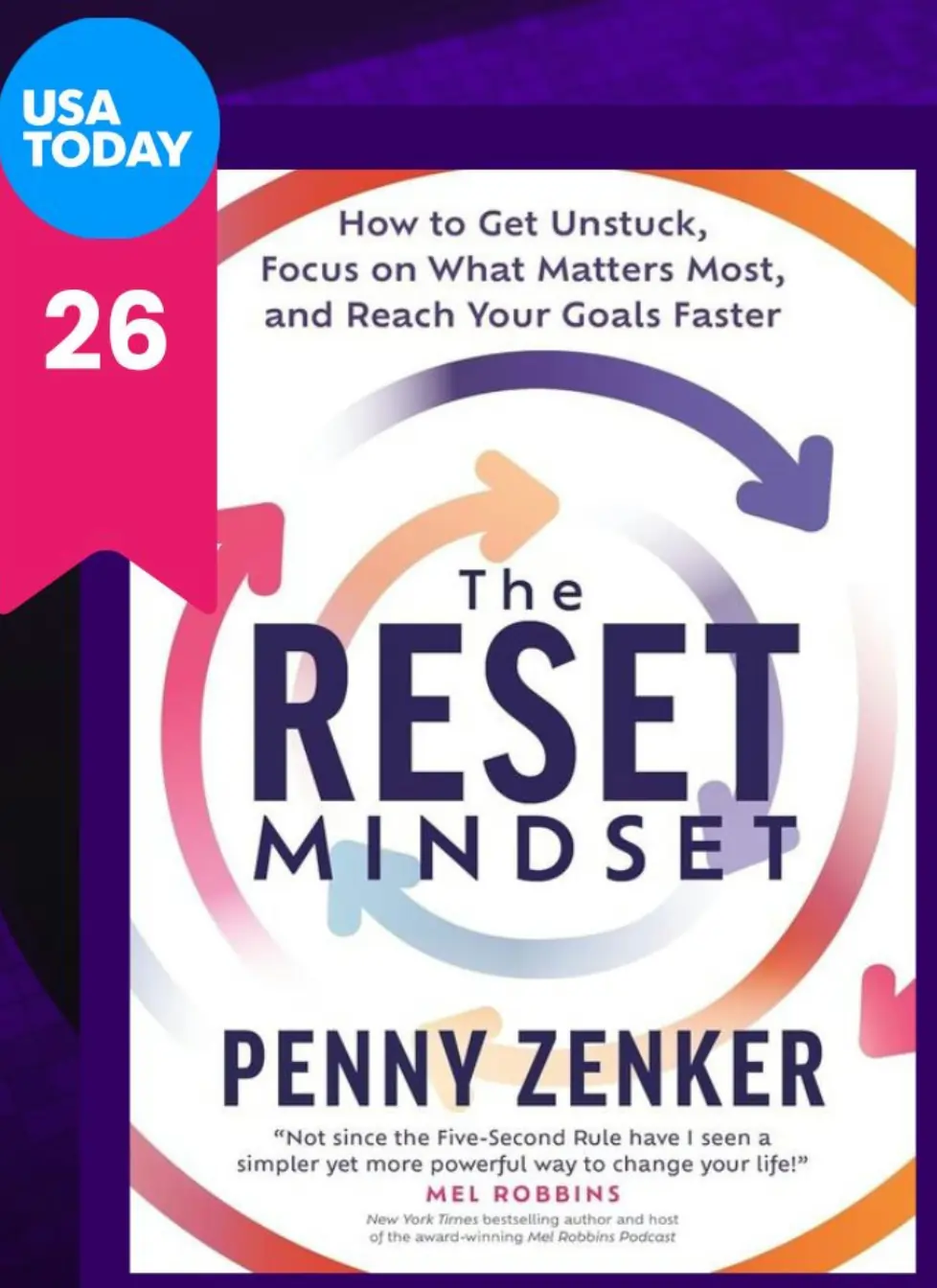
It was one of the very first schools, because I’m all about the learning by doing. That’s how we learn. That’s how we elevate faster. That’s what the Reset Mindset is all about. It’s shortening those learning cycles. Learn as we go and then we’re going to get where we want to go much faster than in these longer learning cycles. I’m super excited about being on the platform. I have two courses on there now. My AI is available. What didn’t I ask you that you wanted to share?
You’ve asked everything that I would flee and have everyone understand that’s going to watch this and read this. What we’re talking about is not just for adults, enterprise and older generation. As a parent, this is something that I’m thinking about for my kids, for their friends, my family’s kids and their future in careers. I’m encouraging everyone to start thinking about anything they have an interest in learning and how you can apply what you’re trying to learn.
Think about no longer going after everything in knowledge as the goal but how will you turn that knowledge. Knowledge is the goal. It’s great for everyone. Knowing things, being smarter and constantly putting in great things inside is key but don’t do it for the objective of putting it inside just to keep for you, your kids, your family, your friends, and everyone you know.
Stop chasing knowledge as the end goal. The real question is how you apply what you know. Learning matters—growing, becoming smarter, and building value is essential—but not just to keep it for yourself. It’s meant to be shared with your family,… Share on XRemind them that if you learn it, apply it, and make it yours so you don’t have to remember it. It’s already part of you. It comes out of you from the inside naturally without you having to think about it. That is where true value is derived for each human on this planet at the moment. How we can be of service to ourselves and this planet? By applying ourselves and being the best version of ourselves. I’ll leave it with that.
For those who are reading, this is not just hard skills. You can apply building trust. As a leader, it becomes part of who you are because you’ve done these exercises in practice, role plays and discussions. You get better and how you communicate. That’s how it works. I’m so excited about this platform. I also have to say your leadership and your team are just fantastic to work with. You do have the heart behind this business which is also what makes it that much more special.
Thank you so much for that. That’s the goal. It’s to have everyone enrolls that they enjoy and can be the best version of themselves. I just happen to have some amazing folks decide to join us on this journey like yourself.
Thank you so much for being here.
Thank you.
Thank you, all. Remember that it’s about shortening those learning cycles and apply. Make it a part of who you are so that it’s not just knowledge. Its application. It becomes experience and then it becomes second nature.
Important Links
About Alex Kutsishin
 After building ten companies, I realized I love working with people and building teams. In fact, helping people grow beyond their self-limiting beliefs might be one of the most rewarding parts of life.
“Life is not that serious” – Enlightened Person
Personal growth is at the heart of evolution and I believe it is the responsibility of every parent, leader, influencer, and expert to help people become the their best version for themselves.
In fact, it is my opinion that it is the responsibility of the employer to make sure each person on the team is in the right place and is feeling fulfilled at work and at home.
“If it’s not fun, don’t do it” – Enlightened Person
Cluster FAQs:
- Why Is The Traditional Lms Model Considered “Broken”?
The traditional Learning Management System (LMS) is fundamentally flawed because it focuses primarily on getting people to remember information, often functioning merely as a “glorified video filing cabinet”. This model is broken because human memory is unreliable, highlighted by the “Law of Forgetting,” where a significant portion of new information fades quickly. The inability to retain and apply knowledge means that time spent learning does not consistently lead to improved performance, which is the ultimate goal. The implication is that training must shift its focus from passive retention to active, instant application to deliver measurable results.
- How Does The “Law Of Forgetting” Impact Traditional Learning Methods?
The Law of Forgetting dictates that people rapidly lose newly acquired information, with up to 70% fading within 24 hours. This natural process matters because traditional, knowledge-focused learning platforms ignore this reality, leading to ineffective training and wasted resources. As humans process more information in one day than people did in an entire lifetime 50 years ago, retaining static knowledge is nearly impossible. The implication is that learning methods must integrate immediate application and reinforcement to combat memory loss and ensure knowledge is internalized as applicable skill.
- What Shift Has Occurred In The Value Of Knowledge, Moving Beyond Mere Information?
The value of a person’s knowledge has fundamentally shifted from knowing things to being able to do things with that knowledge. While in the past, having unique information meant survival or high value—like a King’s court of smart people—this is no longer the case because everyone has access to the same knowledge today. This matters because mere knowledge is static and less valuable than applied, outcomes-focused performance. The implication is that organizations and individuals must prioritize response and performance over simple memorization to stay relevant and effective in an evolving, information-rich world.
- What Is The Fundamental Difference Between A Knowledge Platform And A Performance Platform Like Fuel?
The primary difference is their objective: knowledge platforms teach for understanding, while a performance platform like Fuel teaches for proven application. Knowledge only requires you to say you understand, but performance demands that you prove you understood by successfully doing the task. This distinction matters because focusing on memory alone fails to result in sustained behavioral change or high performance in the real world. The platform’s structure ensures that every piece of content is constantly sharpened toward immediate application, making it a system for doing rather than just knowing.
- How Does Fuel Address The Problem Of Cognitive Overload Caused By Too Much Information?
Fuel addresses cognitive overload by providing a curated platform featuring heart-forward, trusted experts whose content is currently working in the real world. This curatorial process is vital because it filters the immense amount of available knowledge, ensuring users are engaging only with valuable and vetted information. Instead of searching through a huge video library, users receive targeted learning from experts who are actively applying their methods. The implication is that the platform delivers the necessary knowledge when and how it is needed, preventing users from becoming paralyzed by choice and overwhelming data.
- What Is ‘Micro Content’ On Fuel And Why Is It Important For Learning?
Micro content on Fuel refers to lessons and courses that are typically five minutes or less, designed to be immediately actionable. This format is important because it aligns with modern attention spans and the need for just-in-time knowledge acquisition. A learner can access a single, short lesson on a specific skill, such as a negotiation tactic, and apply it right away without needing to complete a six-chapter module. This structure shortens the learning cycle and ensures that the information is used precisely when it is most relevant to the learner’s current task.
- How Are Experts On The Fuel Platform Vetted To Ensure Content Quality And Trust?
Every expert on the platform is rigorously vetted to ensure they have a proven method and process that is currently being applied successfully in their field. This is critical because trust is established when learners know their instructor is not just teaching theory, but actively doing and benefiting clients with their content. Furthermore, the platform integrates an AI instructor trained on the expert’s proven knowledge, enabling users to practice and receive feedback directly related to that expert’s methods. The implication is that learners are guaranteed high-quality, practical content that works, and they can even reach out to the human expert for greater engagement.
- What Does The Power Law Of Practice Reveal About The Limitations Of Repeated Practice Alone?
The Power Law of Practice suggests that while repetition initially leads to improvement, this progress hits a mathematical wall or plateau over time. This limitation is critical because it means merely repeating habits, even good ones, will eventually stop making a person better, leading to stagnation. To break through this limit and achieve elite performance, one needs an expert to provide nuanced guidance and push past the existing capability barrier. The implication is that training programs must include continuous, expert-informed feedback to prevent bad habits and ensure ongoing development, rather than leaving learners to practice in isolation.
- How Does The Platform Facilitate Continuous Application After A Lesson Is Completed?
The platform features an AI instructor that users can continuously go back to for personalized practice and alternative options based on their real-world experience. This ongoing access is essential because it moves learning beyond the point where a traditional program stops, ensuring integration and mastery. If a learner attempts to apply a concept and it does not work in their specific situation, the AI, leveraging the human expert’s knowledge, provides tailored feedback and suggestions. This loop of application, feedback, and integration shortens learning cycles and ensures that the knowledge becomes second nature.
- Why Is Working With An Expert Crucial For Breaking Through Performance Plateaus?
An expert is crucial because they possess the knowledge to help a learner break through the “cap” or limit that occurs when practicing a skill repeatedly. Even when someone reaches an elite status, such as a high-level black belt in martial arts, there is always a nuance that an expert can point out to make them better. This matters because true, elite performance is never finished; it requires constant application and someone to consistently challenge the learner on where they can improve next. The implication is that expert involvement, whether human or AI-driven, is the defining factor that separates high competence from peak performance and enduring mastery.
- What Were The Key Results From The Alpha Schools Research On Personalized Learning?
Alpha schools achieved tremendous results by structuring learning around personalized application rather than rote memorization. They utilized hyper-personalized, nuanced learning with each student having their own AI instructor for every topic. The key outcome was an average SAT score of 1,530 points in 2025—among the highest tracked scores—despite students only spending two hours a day on instruction. This proves that focusing on showing what was understood through unique conversations, rather than passive intake, leads to superior academic performance.
- How Does The Alpha Schools Model Of Two Hours Of Learning Per Day Relate To The Platform’s Methodology?
The Alpha schools model is identical to the platform’s methodology, emphasizing learning followed by immediate and deep personalized application. Students learn for a short time—two hours—and then are required to demonstrate their understanding through unique conversations with their AI instructors. This relationship shows that shortening the time spent on passive learning and maximizing the time spent on personalized, corrective practice is highly effective. The implication is that people can achieve elite results faster and more efficiently when the objective is proven performance, not just knowledge acquisition.
- What Does The Concept Of “The Expert In The Loop” Mean In The Current Ai-Driven Environment?
“The Expert In The Loop” refers to the expert’s role shifting from performing the task to reviewing and validating the results of AI-assisted work. For instance, instead of writing a contract for $200 an hour, an attorney is now asked to ensure a written contract will not lead to legal trouble. This shift matters because the expert’s knowledge is more valuable than ever, as it is needed to vet the accuracy and safety of AI-generated information. The implication is that experts like Penny become crucial for preventing users from acting on misinformation and ensuring the highest quality performance.
- How Can Experts Leverage Platforms Like Fuel To Increase Their Impact And Compensation?
Experts can leverage the platform by creating AI-driven courseware that allows them to be at scale for thousands of people simultaneously. This mechanism is crucial because it allows experts to be compensated for what they know, not just what they do for a small number of clients. By having their knowledge encoded in an AI instructor, an expert can virtually be in the meeting room with every employee of an organization, helping hundreds instead of just the dozens who can afford personal time. The implication is a massive increase in an expert’s physical help, impact, and revenue potential by scaling their proven methodologies.
- Does This Focus On Performance Learning Only Apply To Hard Skills, Or Can Soft Skills Also Be Mastered This Way?
This performance-based approach is fully applicable to soft skills, not just hard skills or technical information. For example, complex soft skills like building trust as a leader or improving communication can be mastered through guided exercises and practice. This is vital because practice, role-plays, and discussions with the AI instructor turn abstract concepts into integrated behavior that becomes part of who the person is. The implication is that the application-focused methodology shortens the learning cycle for essential human skills, transforming knowledge into second nature and elevating the learner faster.
Quote Bank:
- Knowledge alone is static; only applied knowledge is valuable in an ever-evolving world.
- The most advanced learning systems don’t teach you to remember; they train you to apply.
- The Law of Forgetting proves that memory is a poor foundation for long-term competence.
- A learning platform asks, ‘Do you understand?’ A performance platform demands, ‘Can you do it?’
- In an age of infinite information, trusted curation is the first step toward focused, measurable results.
- Micro content is effective not because it is short, but because it is designed to be immediately actionable.
- An expert’s authority is rooted not in theory, but in a proven method that is actively working now.
- If your training ends when the program does, you are missing the most critical part of the cycle: integration.
- The Power Law of Practice confirms that repetition creates a foundation, but expert guidance breaks the performance ceiling.
- Elite performance is never finished; it requires a coach to continuously show you where your next improvement lies.
- The highest level of success is achieved through personalized, nuanced application, not mass instruction.
- Shortening the learning cycle means maximizing practice and personalized application, not reducing the amount of material.
- The ‘Expert In The Loop’ is a safety net; their value shifts from creating the work to validating its accuracy and impact.
- An expert’s worth is measured by how effectively their knowledge can be scaled to thousands, not just the few they serve personally.
- When you stop trying to remember a skill, and it simply comes out of you naturally, you have achieved true mastery.